Loading...
UX Case Study20225 Weeks
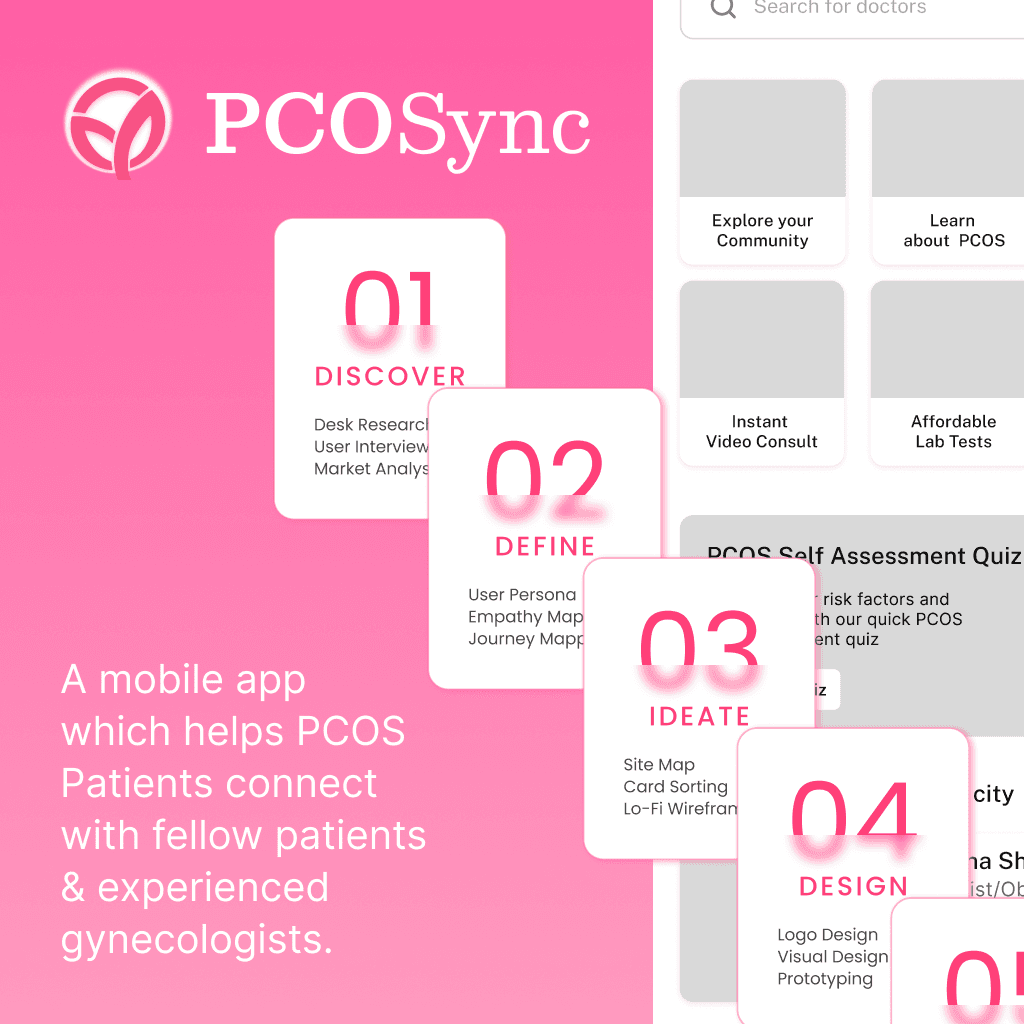
PCOSync
Breaking the Silence Around PCOS
A UX research case study exploring how to help women with PCOS connect with fellow patients and empathetic gynecologists.
Role
UX Designer & Researcher
Team
Solo Project
Context
Course Project
“”|
It wasn't until I started talking to people that my perspective shattered. One by one—my cousins, my close friends, and other women in my life revealed that they too had been diagnosed. They were all fighting the same battles, but completely in private. I had no idea.
It made me wonder: how many more were suffering in silence?
I realized the core of the problem wasn't just medical—it was the profound isolation that came from a condition no one was talking about. This project is my attempt to break that silence.
Understanding the Problem
PCOS: A Hidden Epidemic
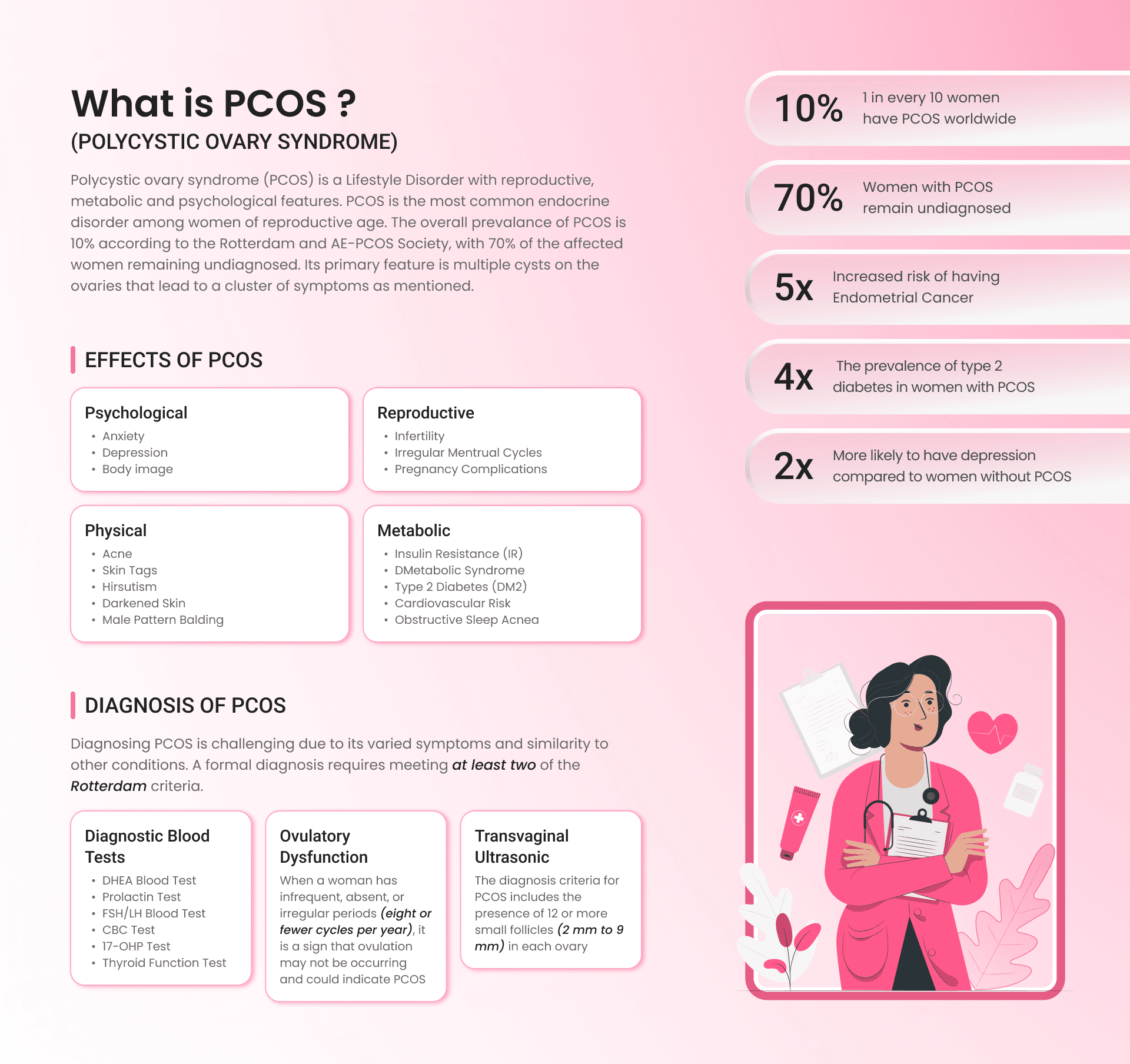
Polycystic Ovary Syndrome affects millions of women worldwide, yet awareness and support remain critically low.
0
Women Affected
PCOS is the most common endocrine disorder among women of reproductive age
0
Undiagnosed
The majority of women with PCOS don't know they have it
0
Depression Risk
Women with PCOS are significantly more likely to experience depression
0
Cases Globally
And projected to reach 78 million by 2036
My Approach
The Design Process
I followed a structured UX research process over 5 weeks to deeply understand the problem space.
01
Discover
Desk Research, User Interviews, Market Analysis
02
Define
User Personas, Empathy Maps, Journey Mapping
03
Ideate
HMW Questions, Card Sorting, Site Mapping
04
Design
Information Architecture, User Flows
05
Validate
Usability Testing, Iteration
Research
Listening to Real Stories
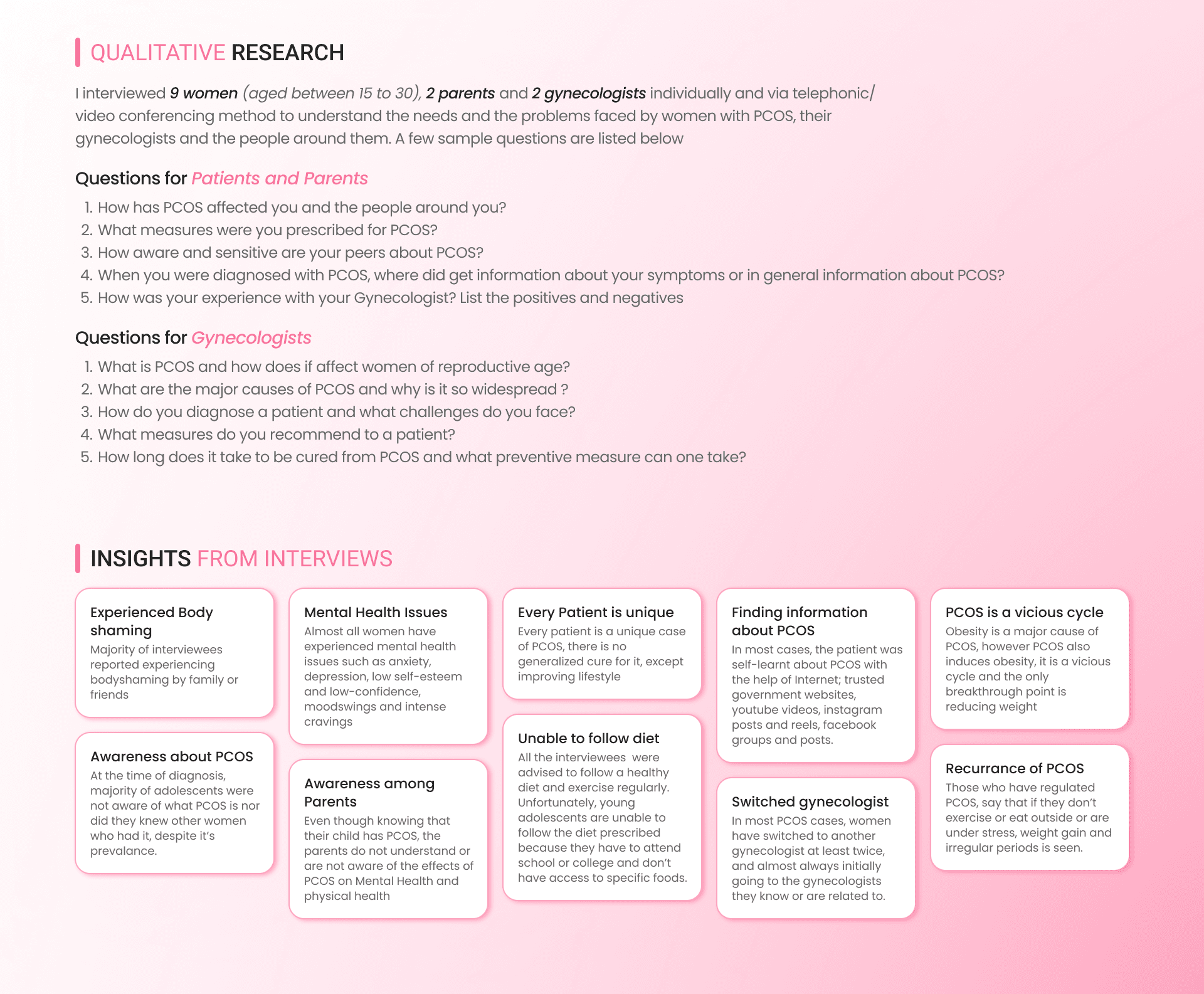
I conducted qualitative research with 13 participants across 4 stakeholder groups to understand the full ecosystem of PCOS care.
0
Women with PCOS
Ages 15-30
0
Mothers
Of daughters with PCOS
0
Gynecologists
Healthcare providers
0
Total Interviews
Via video/phone calls
Key Findings
What I Discovered
The research revealed that the challenges of PCOS extend far beyond the physical symptoms.
Mental Health is Overlooked
Almost all interviewees experienced anxiety, depression, and low self-esteem. Parents and even some doctors weren't aware of this connection.
"What" Without "How"
Gynecologists recommend healthy diet and exercise, but don't explain how to actually implement these changes in daily life.
Doctor Shopping
Most women switched gynecologists at least twice, often starting with family friends who weren't the right fit.
Body Shaming is Rampant
Majority of interviewees reported experiencing body shaming by family or friends, significantly impacting mental health.
Low Awareness at Diagnosis
At diagnosis, most adolescents didn't know what PCOS was, nor did they know other women who had it—despite its prevalence.
PCOS is a Vicious Cycle
Obesity causes PCOS, but PCOS also induces obesity. Stress triggers recurrence. The only breakthrough point is lifestyle change.
“There were times when I felt constantly anxious and depressed but could not tell anyone.”
“My gynac gave me very basic information and told me to google about PCOS on my own.”
User Segmentation
Mapping the Stakeholders
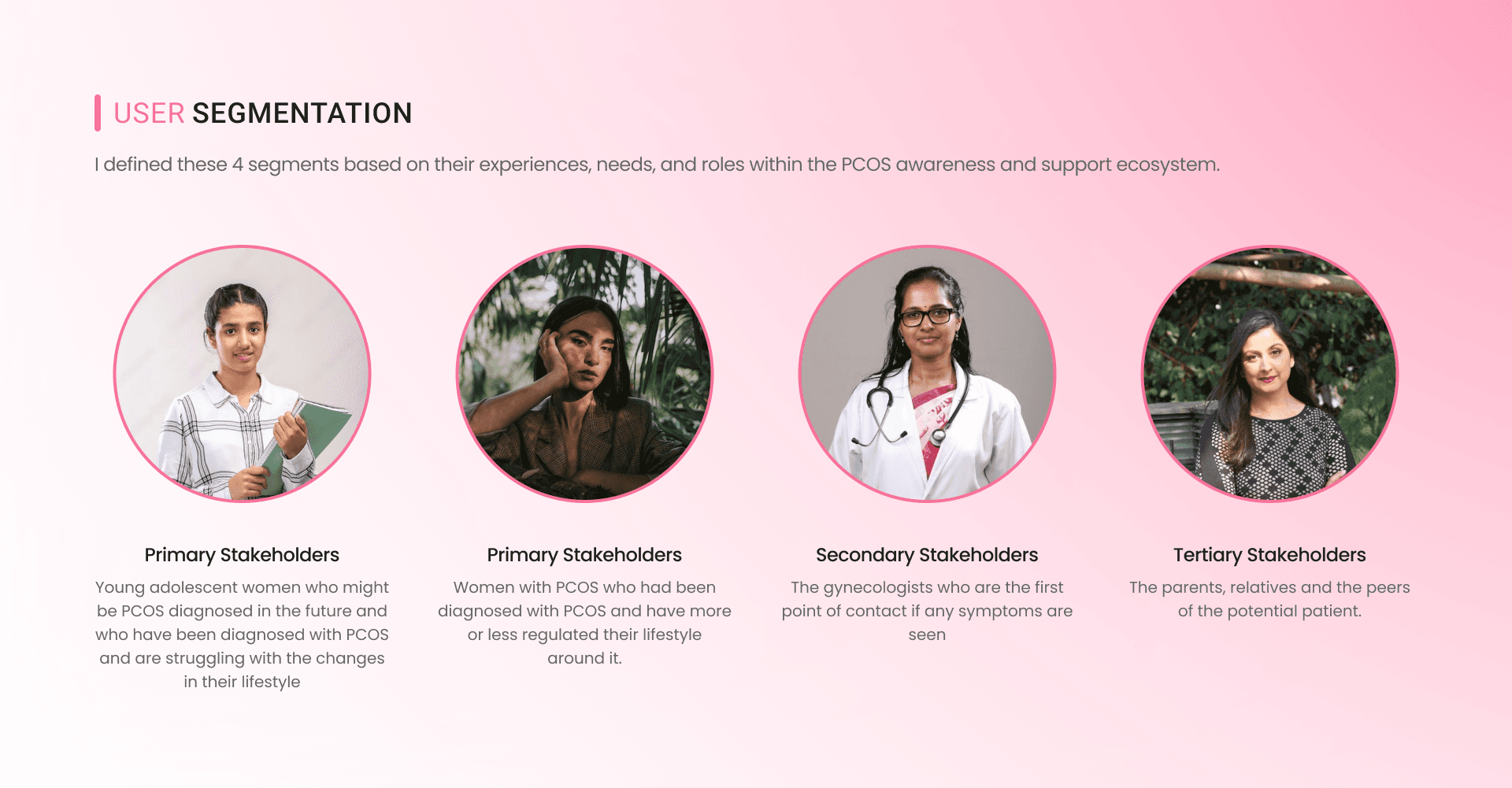
I identified 4 distinct user segments within the PCOS awareness and support ecosystem.
Personas & Empathy Maps
Understanding Our Users
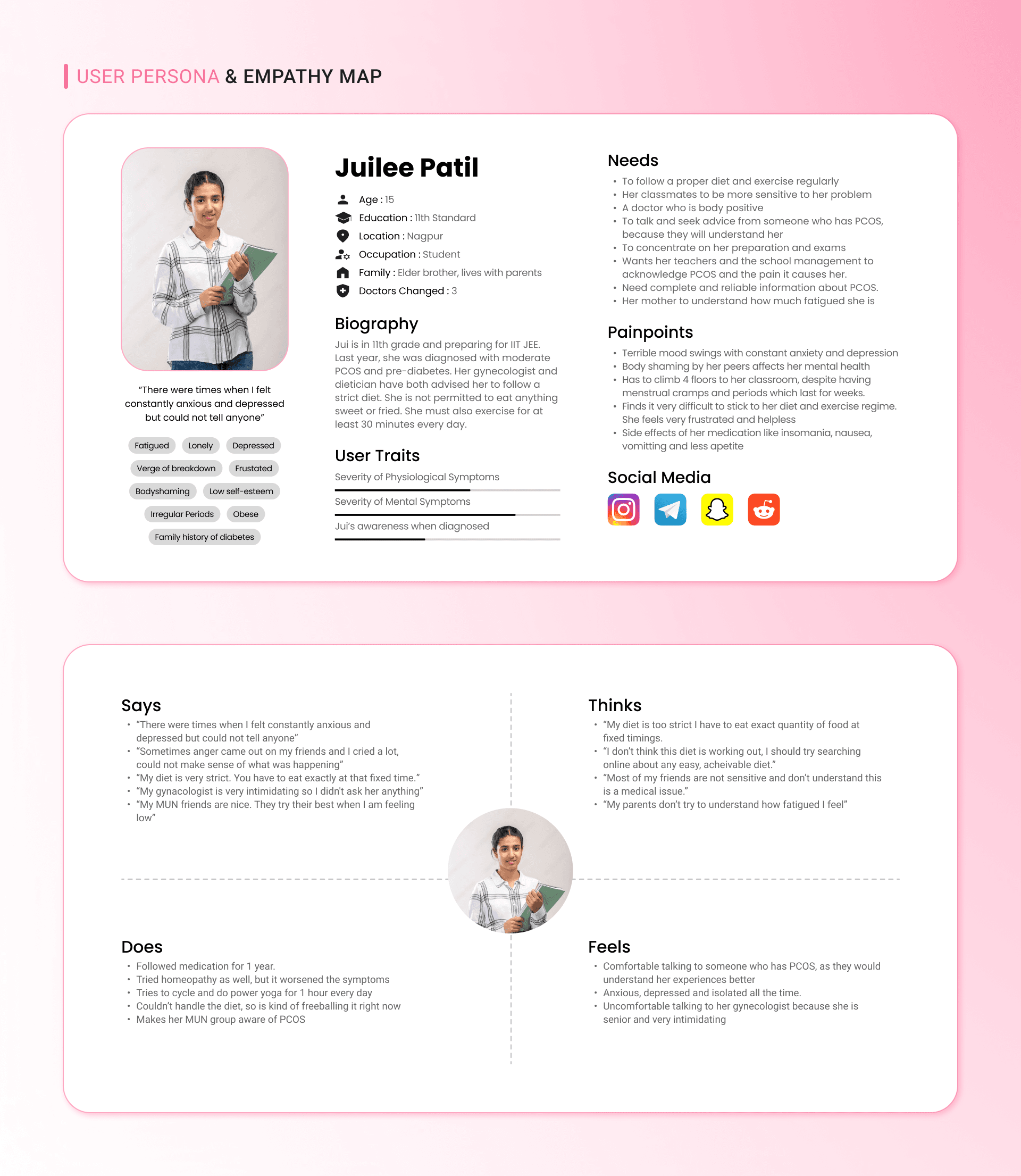
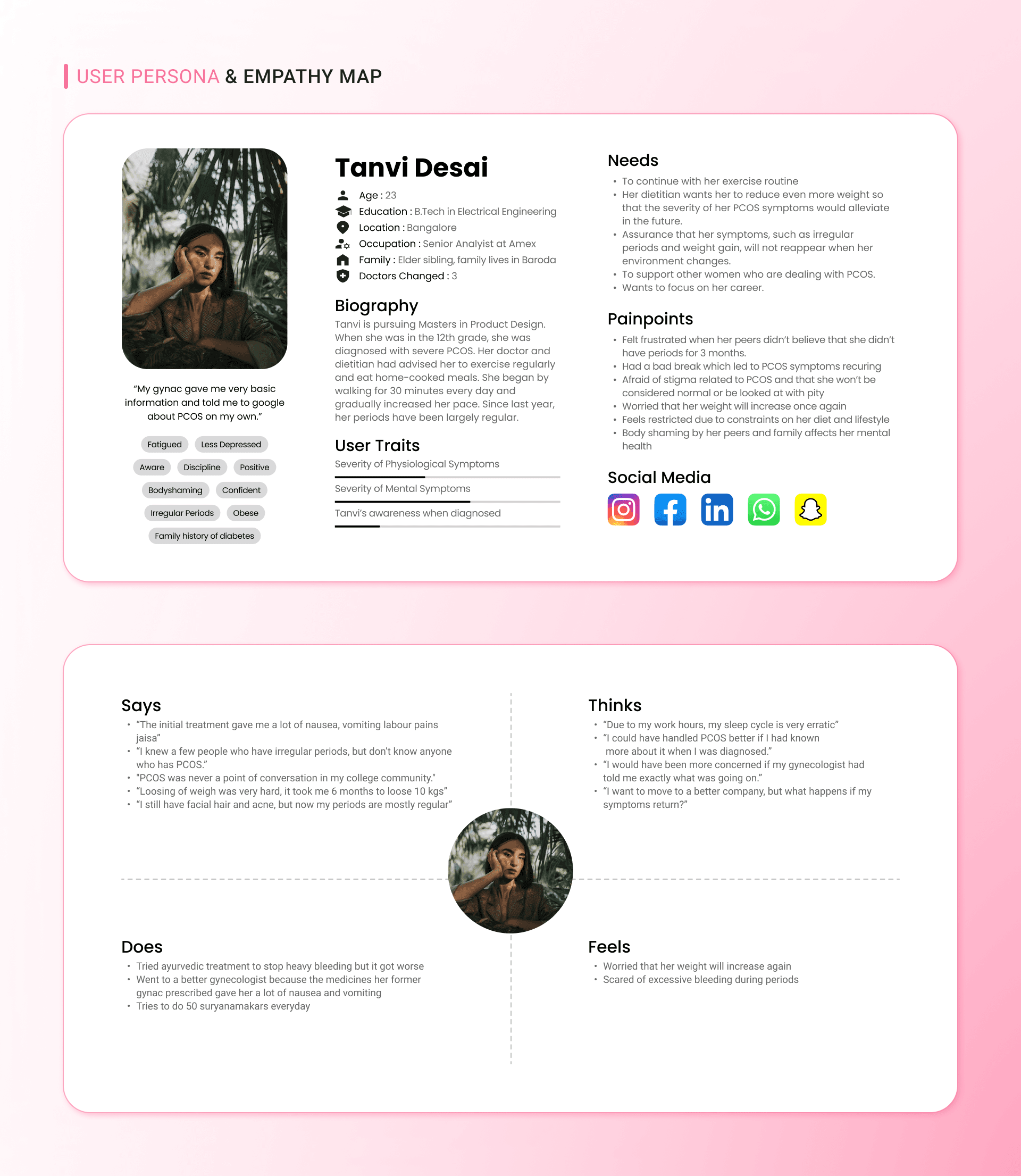
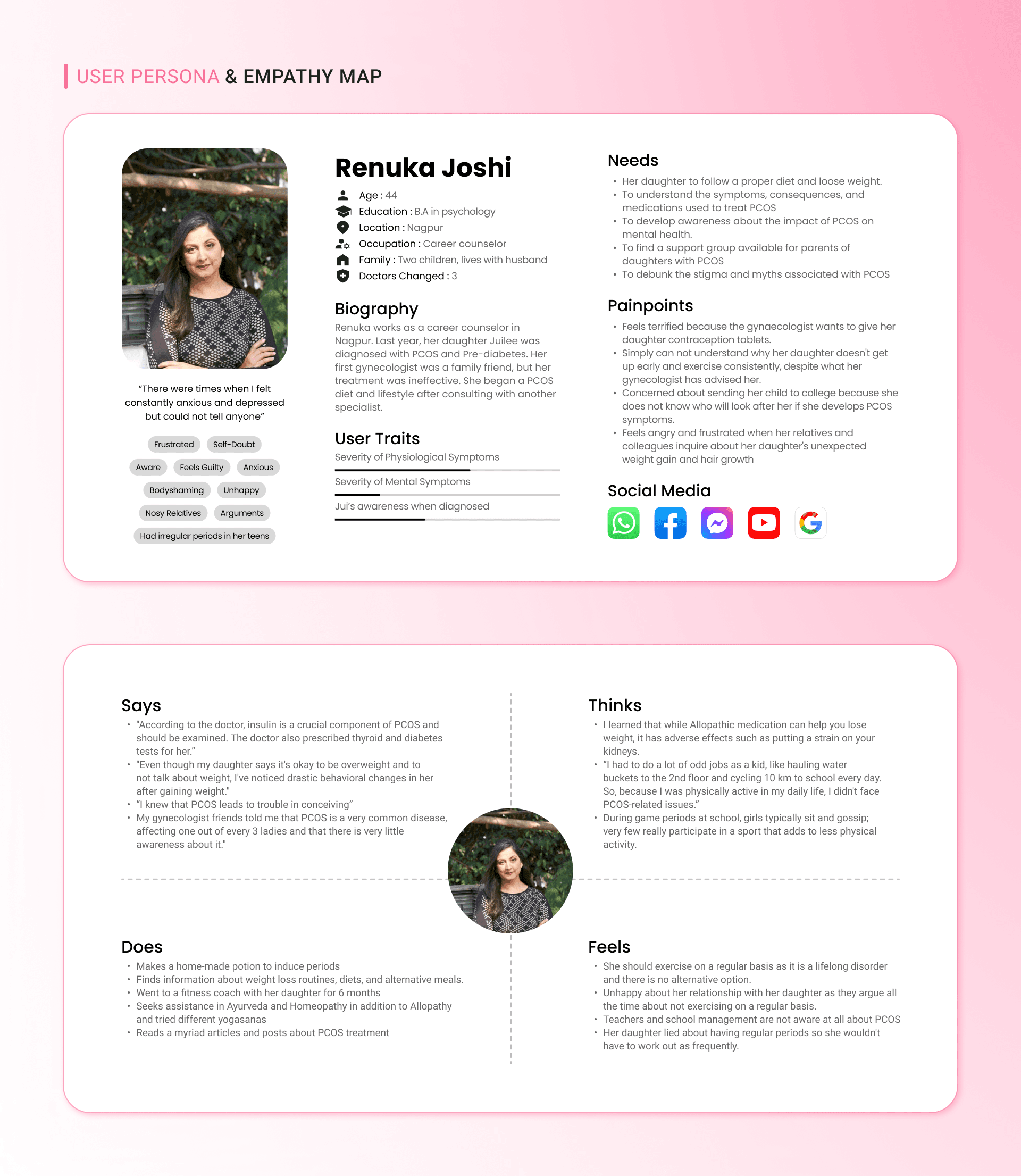
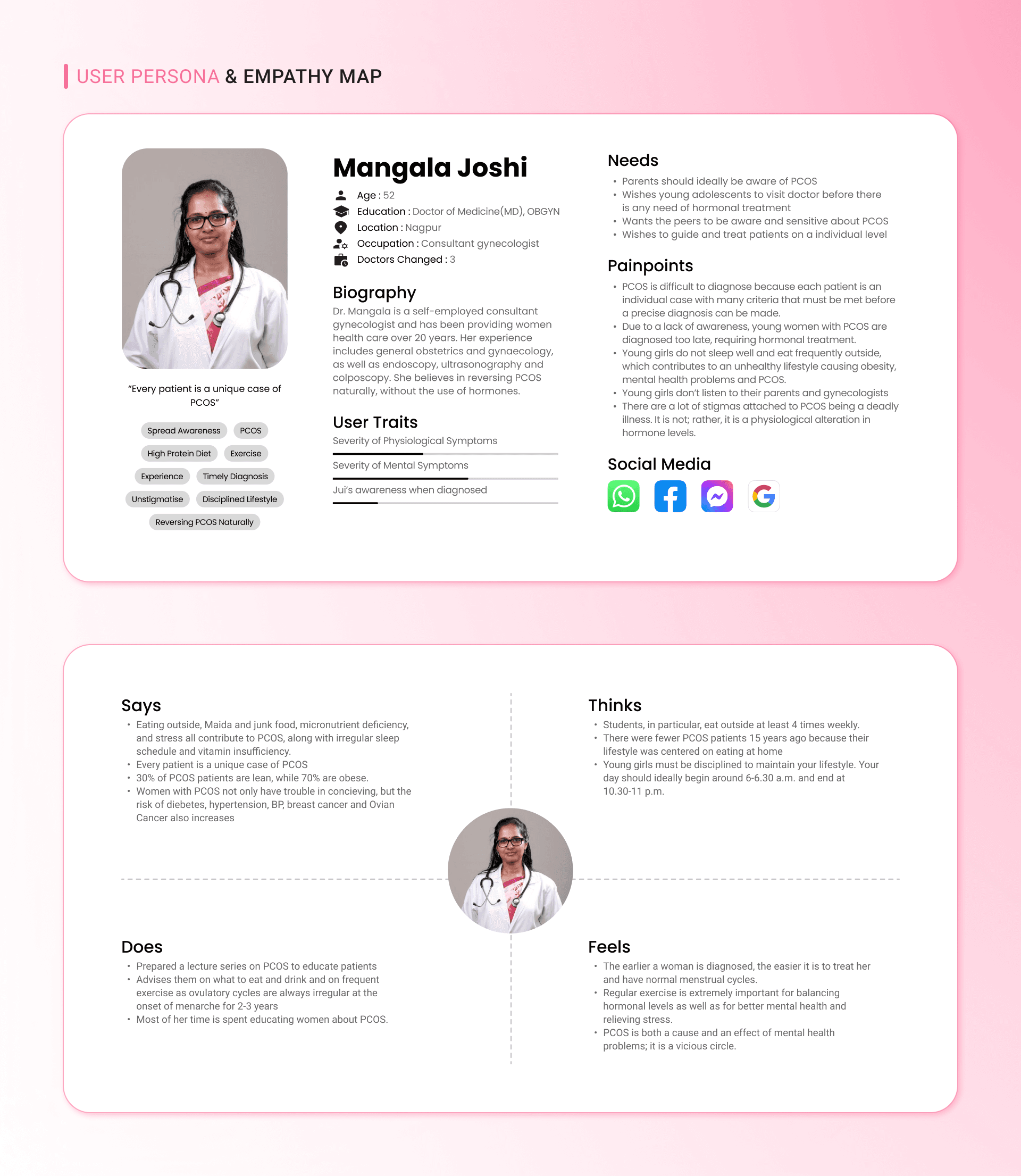
I created detailed personas for each stakeholder group, combining interview insights into actionable user representations.
Persona 1: The Struggling Student
Persona 2: The Managed Professional
Persona 3: The Concerned Parent
Persona 4: The Healthcare Provider
Competitive Analysis
Understanding the Market
I analyzed 5 competitors—2 direct (PCOS-specific) and 3 indirect (general women's health)—to identify gaps and opportunities.
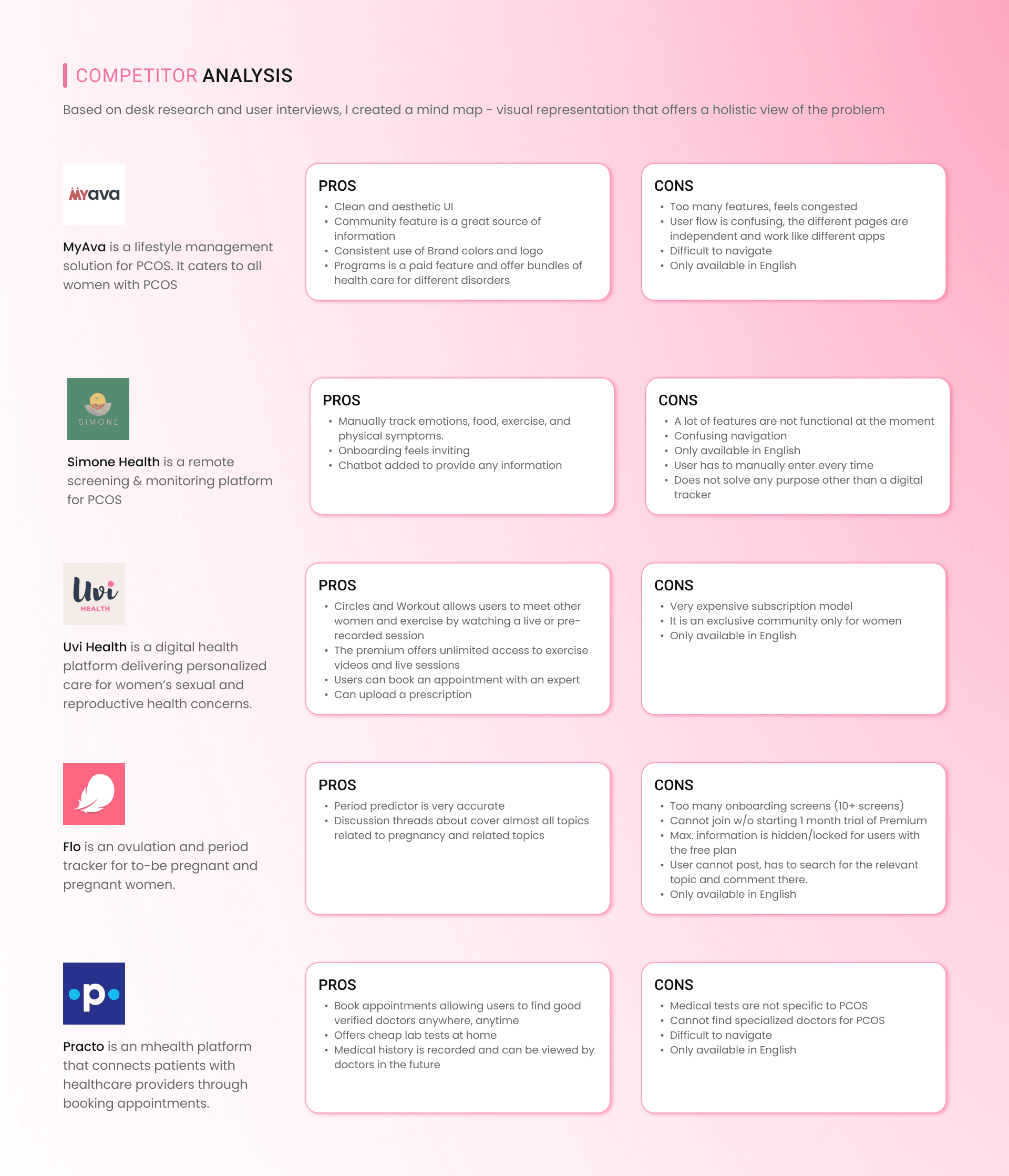
Opportunities Found
- • No consolidated platform for PCOS awareness + community
- • Existing apps lack emotional support features
- • Gap in connecting patients with empathetic doctors
- • Limited resources for parents and families
Common Weaknesses
- • Confusing navigation and feature overload
- • Premium paywalls blocking essential content
- • Only available in English
- • Inconsistent visual design and UX
Synthesis
Defining the Problem
To empower young females with PCOS and their families by increasing awareness about the condition's links to lifestyle, genetics, and mental-physical health issues and by connecting them with fellow patients & experienced gynecologists which will foster shared experiences, reduce mental health issues, and promote happier lives despite PCOS complexities.
Ideation
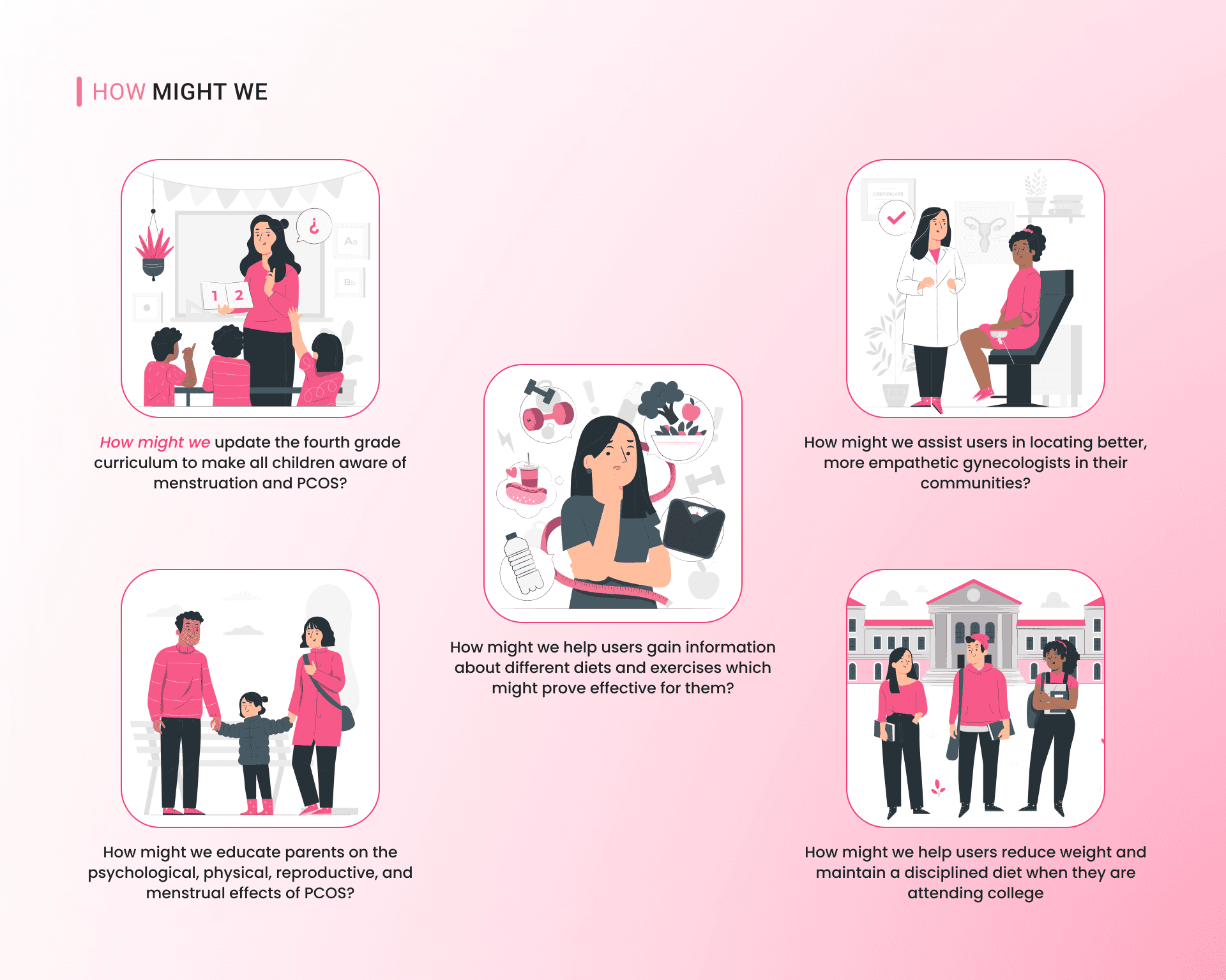
How Might We...
I framed key opportunities as 'How Might We' questions to guide solution ideation.
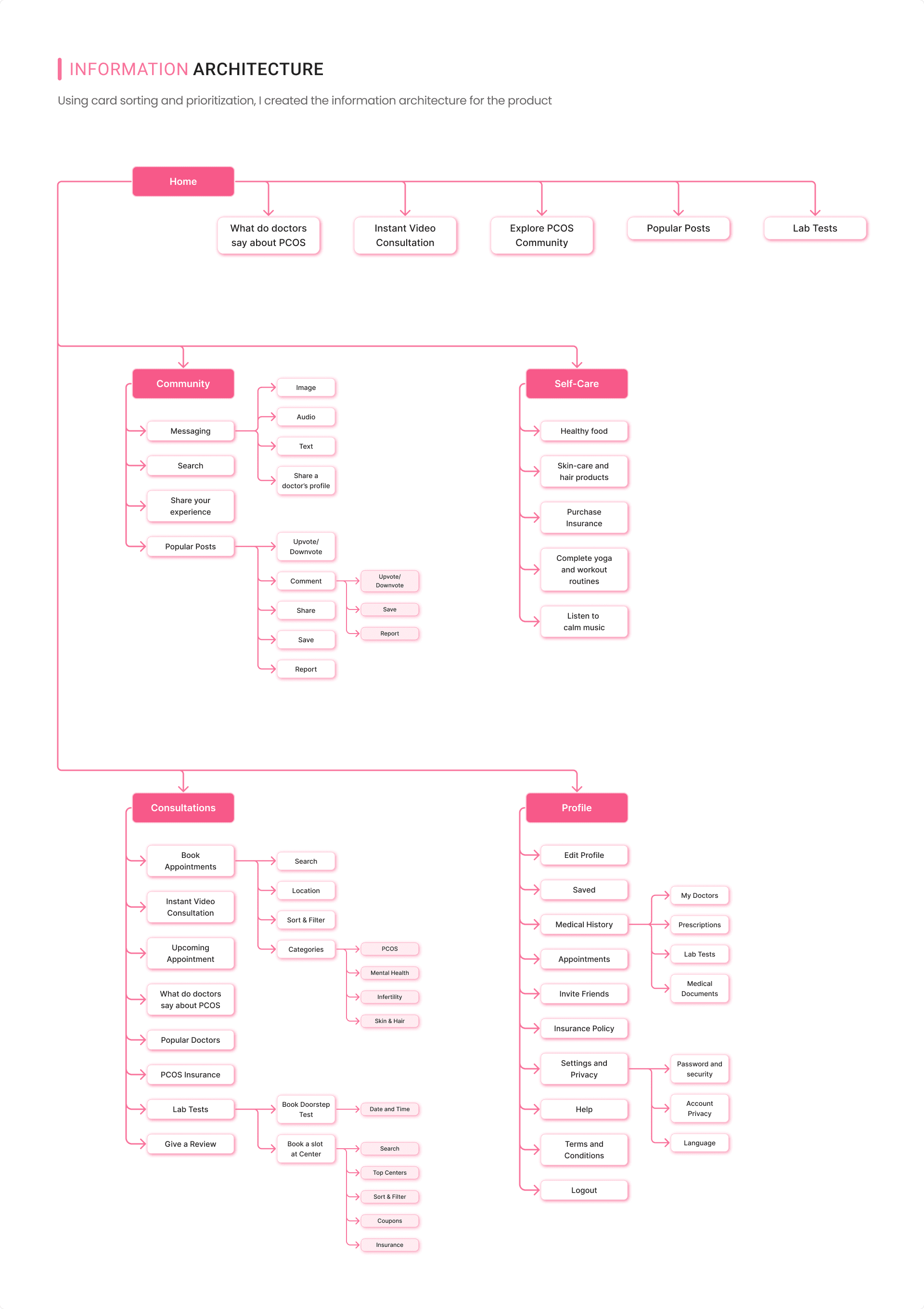
Information Architecture
Structuring the Solution
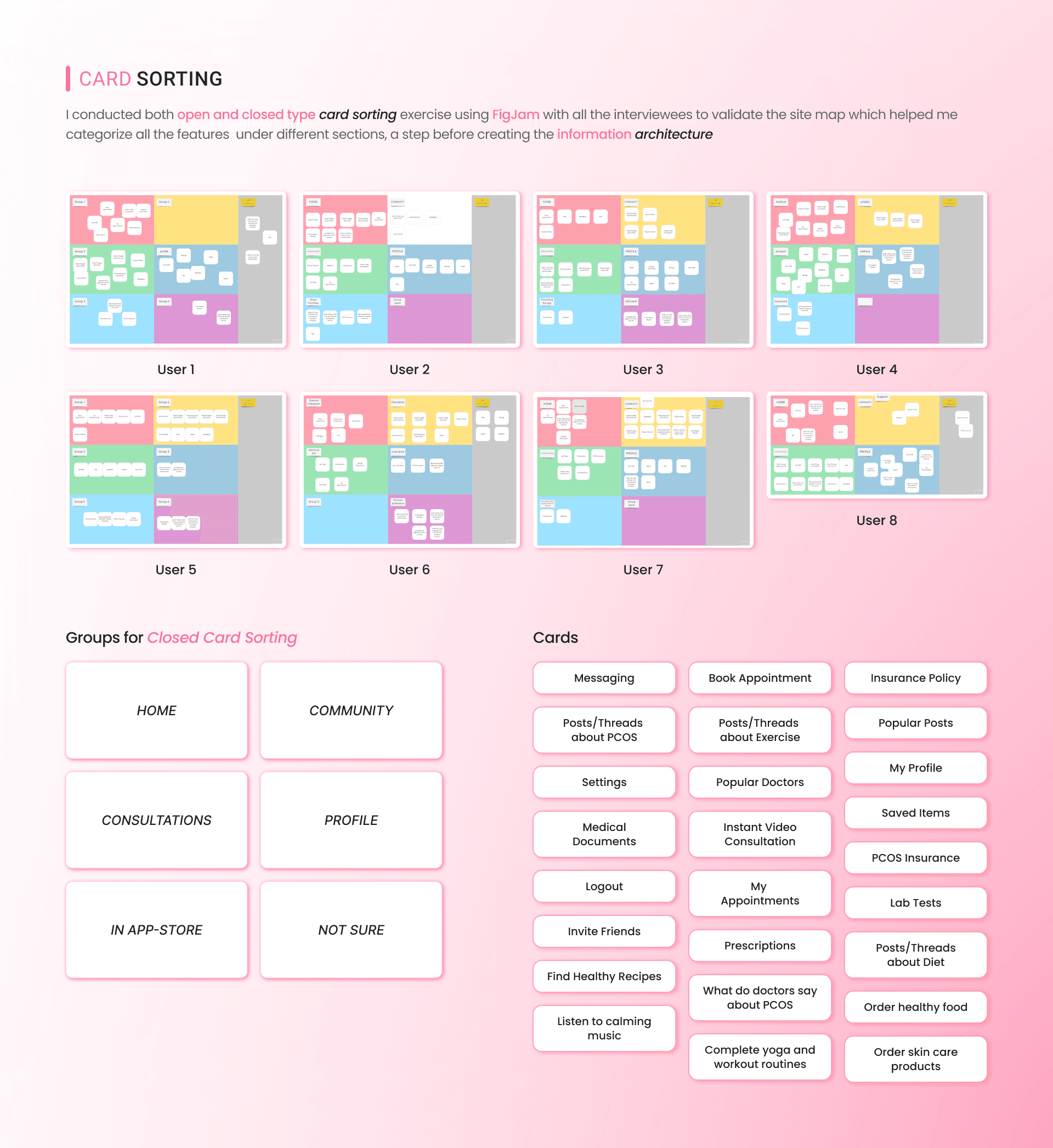
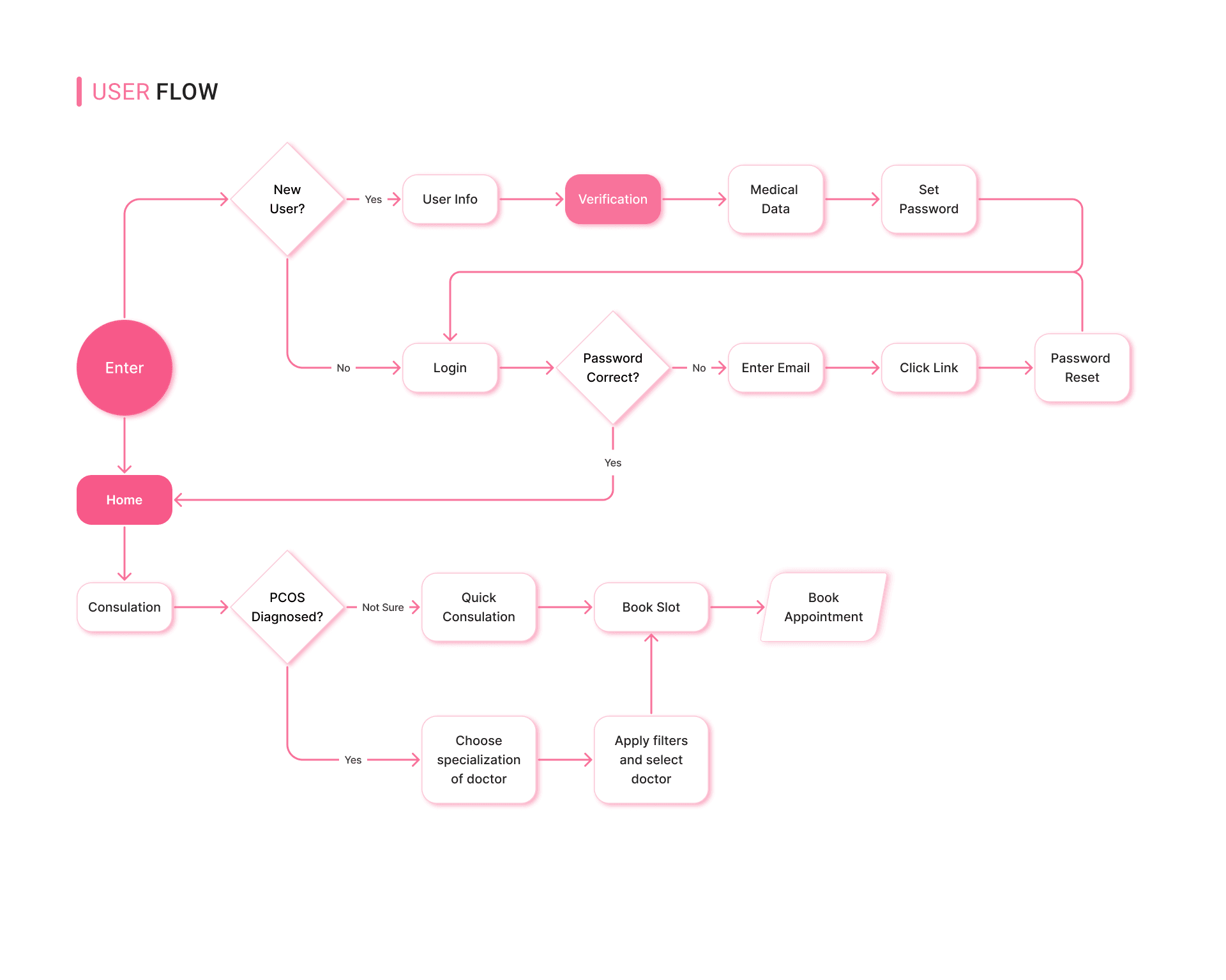
I used card sorting with 8 participants to validate the information architecture before designing user flows.
Card Sorting Results
Site Map
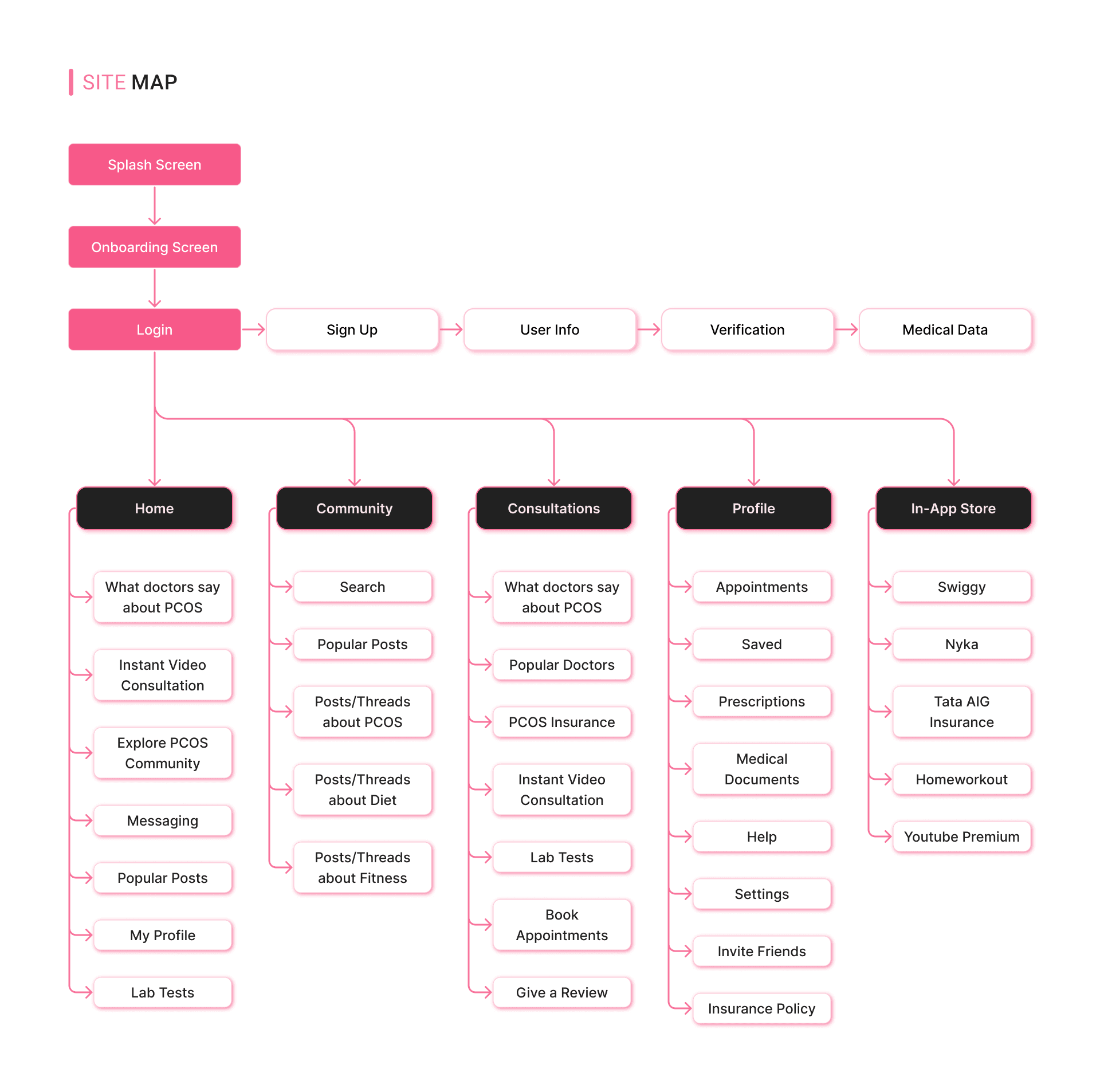
Detailed Information Architecture
User Flows
What's Next
Future Directions
This project concluded at the information architecture stage. Here's what would come next.
01
UI Design
Create high-fidelity mockups based on the validated information architecture, focusing on a warm, supportive visual language.
- Design system with PCOS-friendly color palette
- Accessible typography and contrast ratios
- Microinteractions for emotional support features
- Component library for community features
02
Usability Testing
Test prototypes with target users to validate design decisions and identify pain points in the user experience.
- Recruit 8-10 participants across user segments
- Think-aloud protocol for navigation testing
- A/B testing for community engagement features
- Accessibility audit with screen readers
03
MVP Development
Build a minimum viable product focusing on the community feature—the highest-impact, lowest-effort solution identified.
- Core community forum with anonymous posting
- Doctor directory with empathy ratings
- Basic symptom tracking integration
- Push notifications for community engagement
Reflections
What I Learned
🔍
On UX Research
This project reinforced that the most valuable insights come from listening, not assuming. Every interview challenged my preconceptions about what women with PCOS actually need—it wasn't better tracking features, it was connection and understanding.
💭
On Designing for Sensitive Topics
Healthcare design requires extra care with language and visuals. Body positivity, avoiding triggering imagery, and creating safe spaces for vulnerable conversations became central to every design decision.
💖
On Personal Connection
Starting with my sister's story wasn't just narrative technique—it was the foundation of genuine empathy. Personal connection to the problem space made me a more thoughtful researcher and designer.
Design isn't just about solving problems—it's about understanding people first.
Thanks for reading!
If you'd like to discuss this project or explore working together, I'd love to hear from you.